Echoes of the North
Wandering from Akita’s quiet streets to Kakunodate’s preserved samurai district, where history lingers in the wooden walls.
Kakunodate greeted me with a quiet, clear morning—the kind of autumn day where the light feels softer, the shadows longer, and the air just cold enough to make you breathe a little deeper. It was late October, chilly but bright, and the sun washed the streets in a warm glow that made the old samurai houses look even more timeless. I’d only planned a day trip, but from the moment I stepped off the train, the town felt like a place I could wander for hours without keeping track of time.
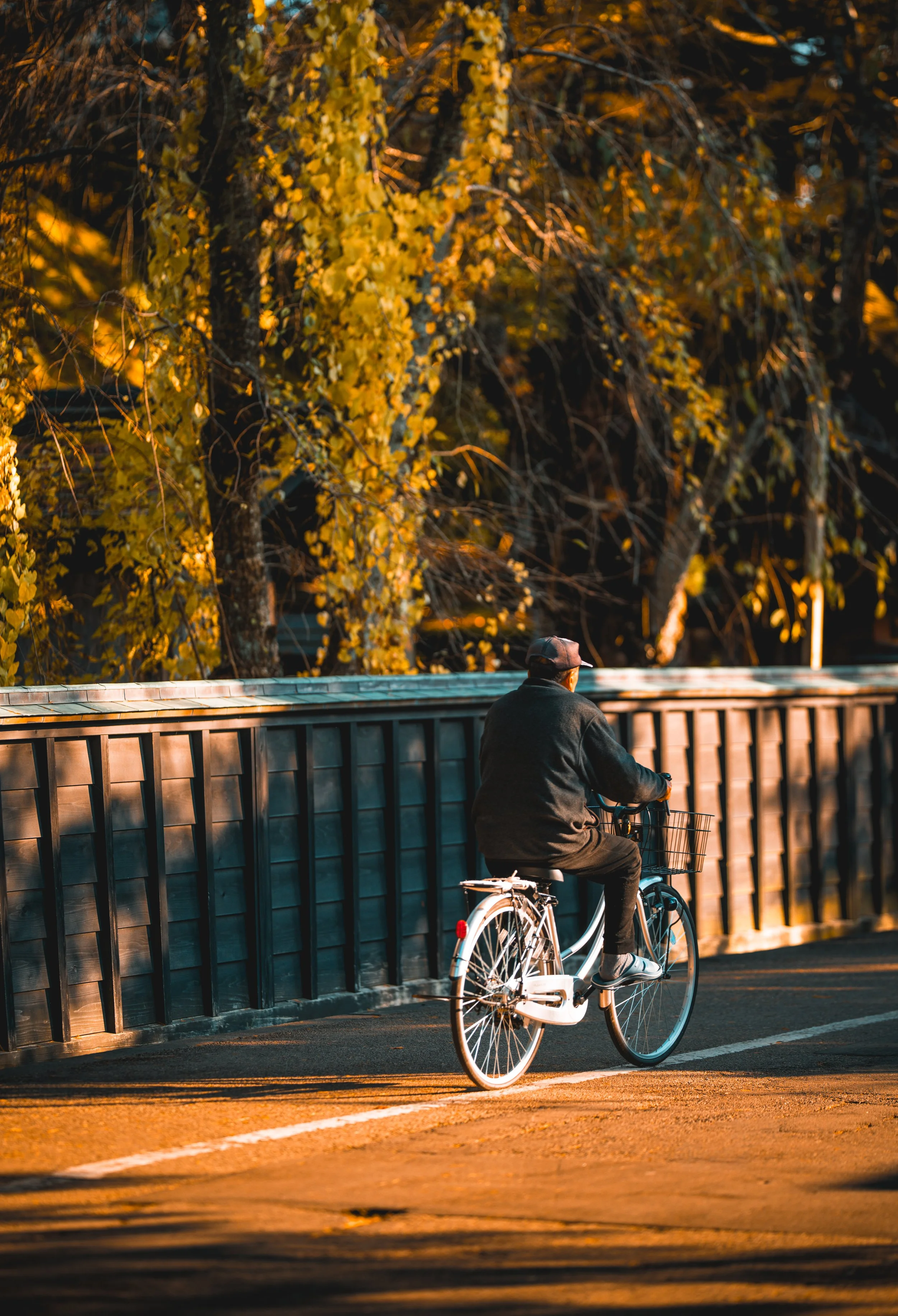
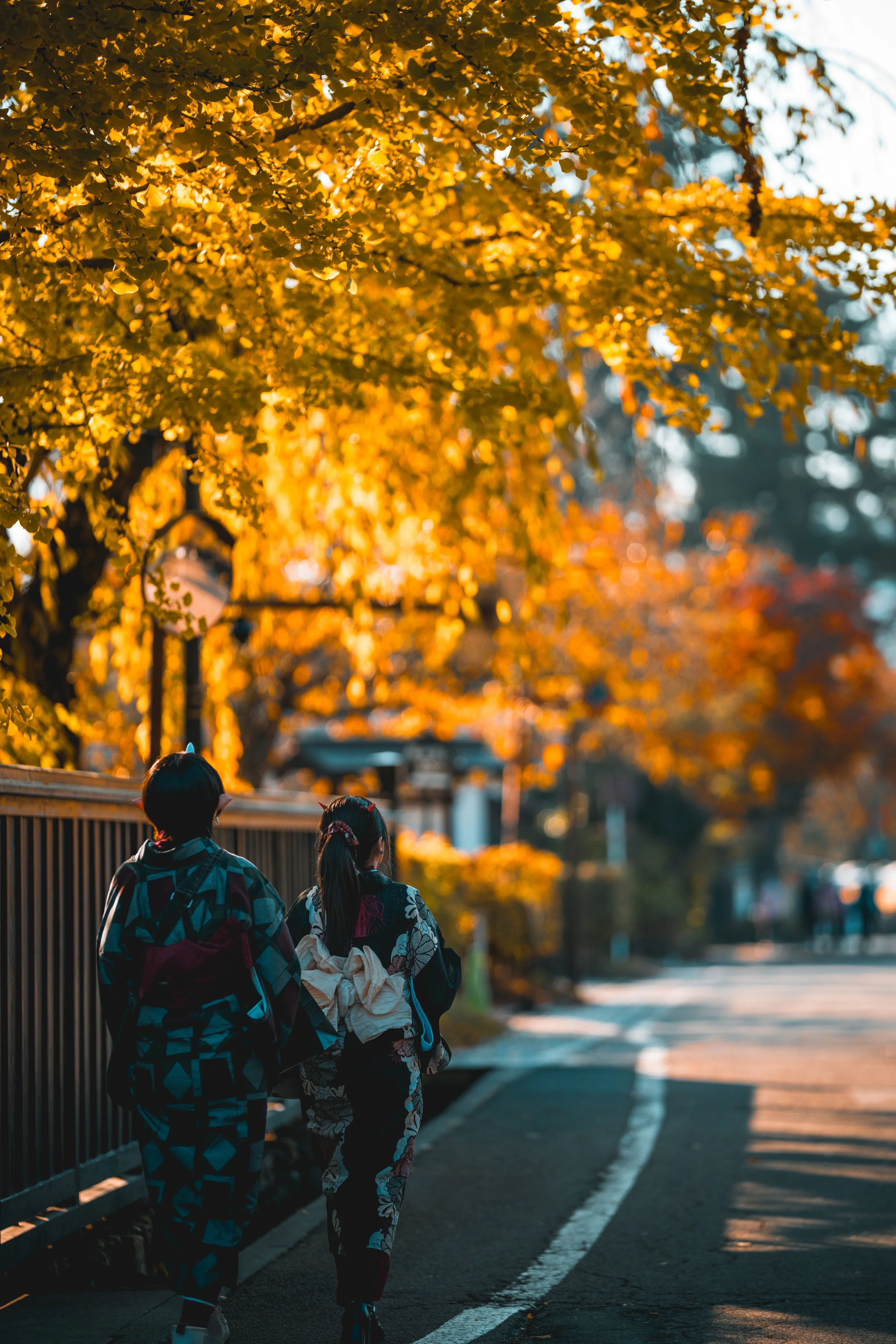
Walking through the samurai district felt like stepping into a well-kept secret. The dark wooden fences stretched along the roads like silent guides, and behind them, the old residences sat quietly, holding stories far older than anything I could capture with my camera. The town had visitors, but it never felt crowded—just a soft murmur of footsteps and camera shutters echoing under the orange and yellow leaves.
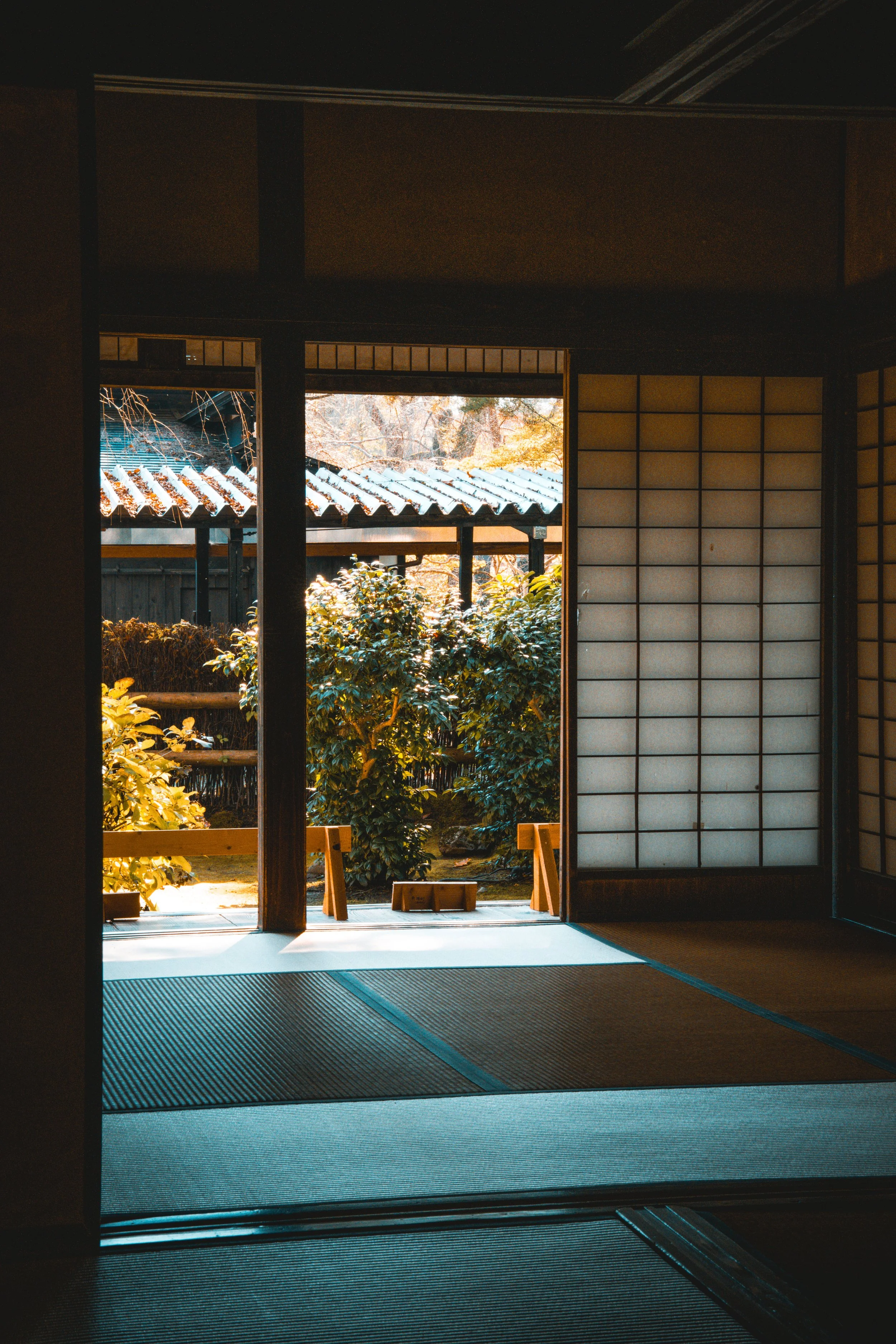
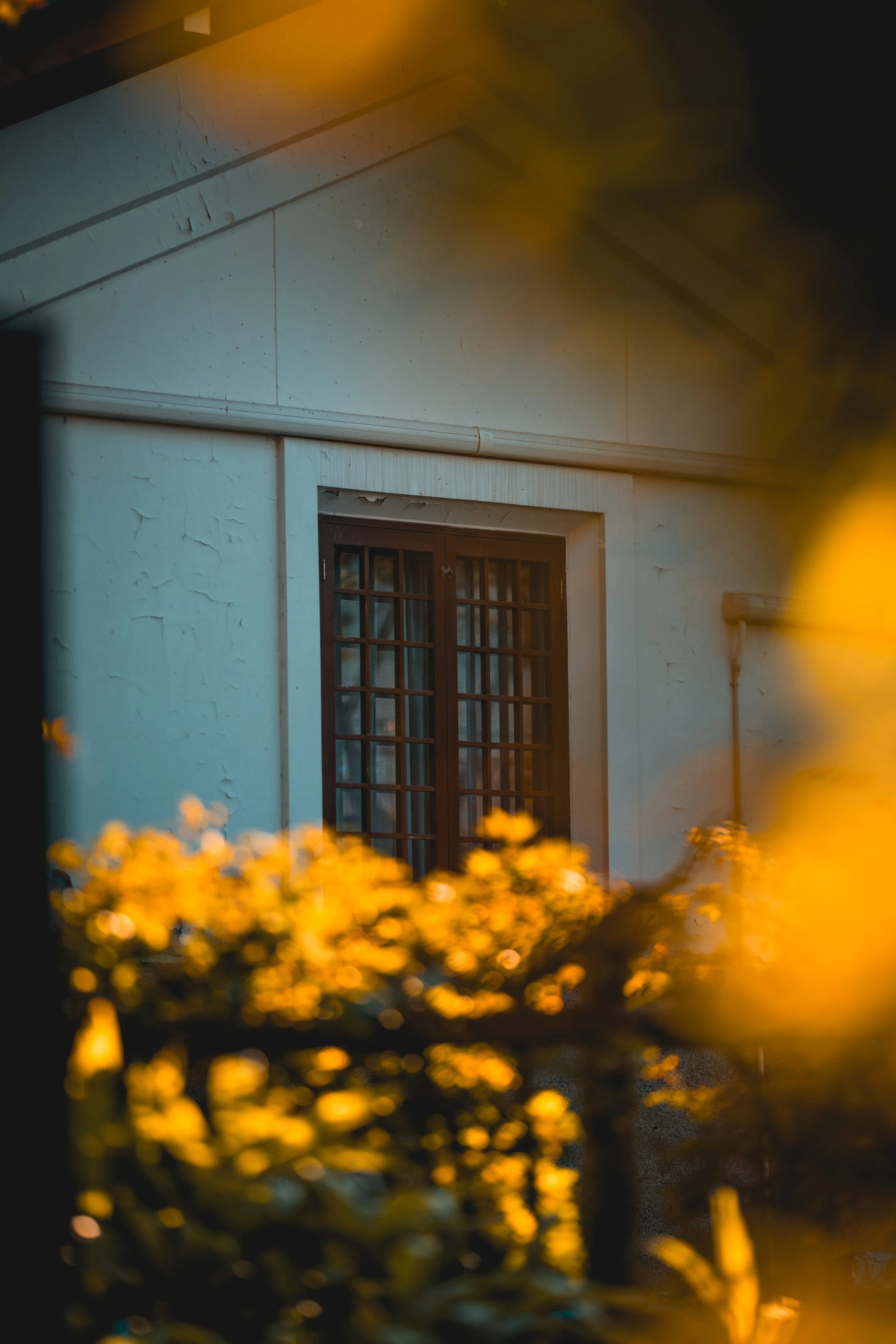
Through the shoji lattice window, the entire autumn landscape became a framed painting. The garden beyond—with its river stones, tender plants, and golden canopy—seemed almost intentional, as if it had been arranged just for this view.
I stood in the cool shade of the interior, looking out at that pool of warm golden light.
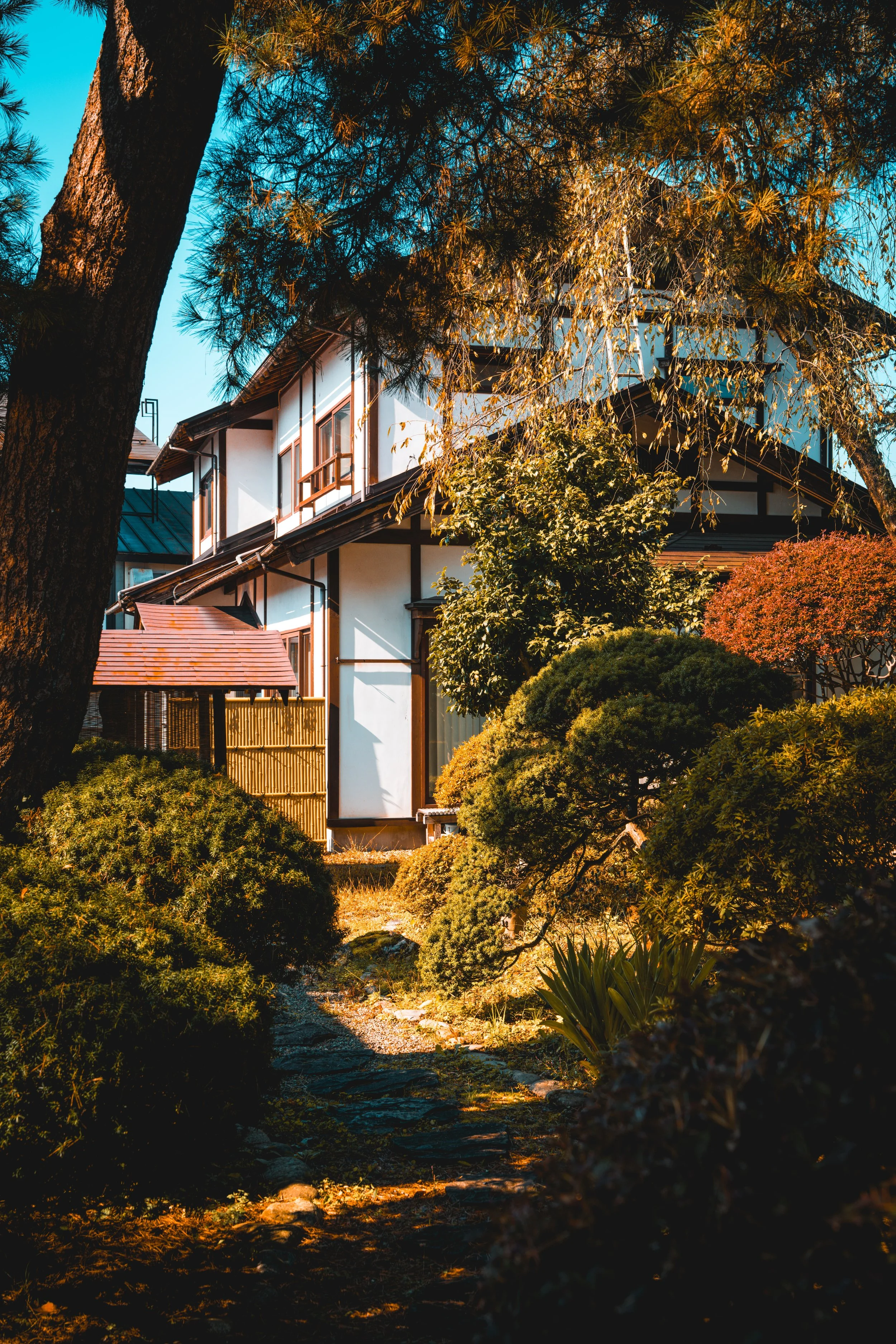
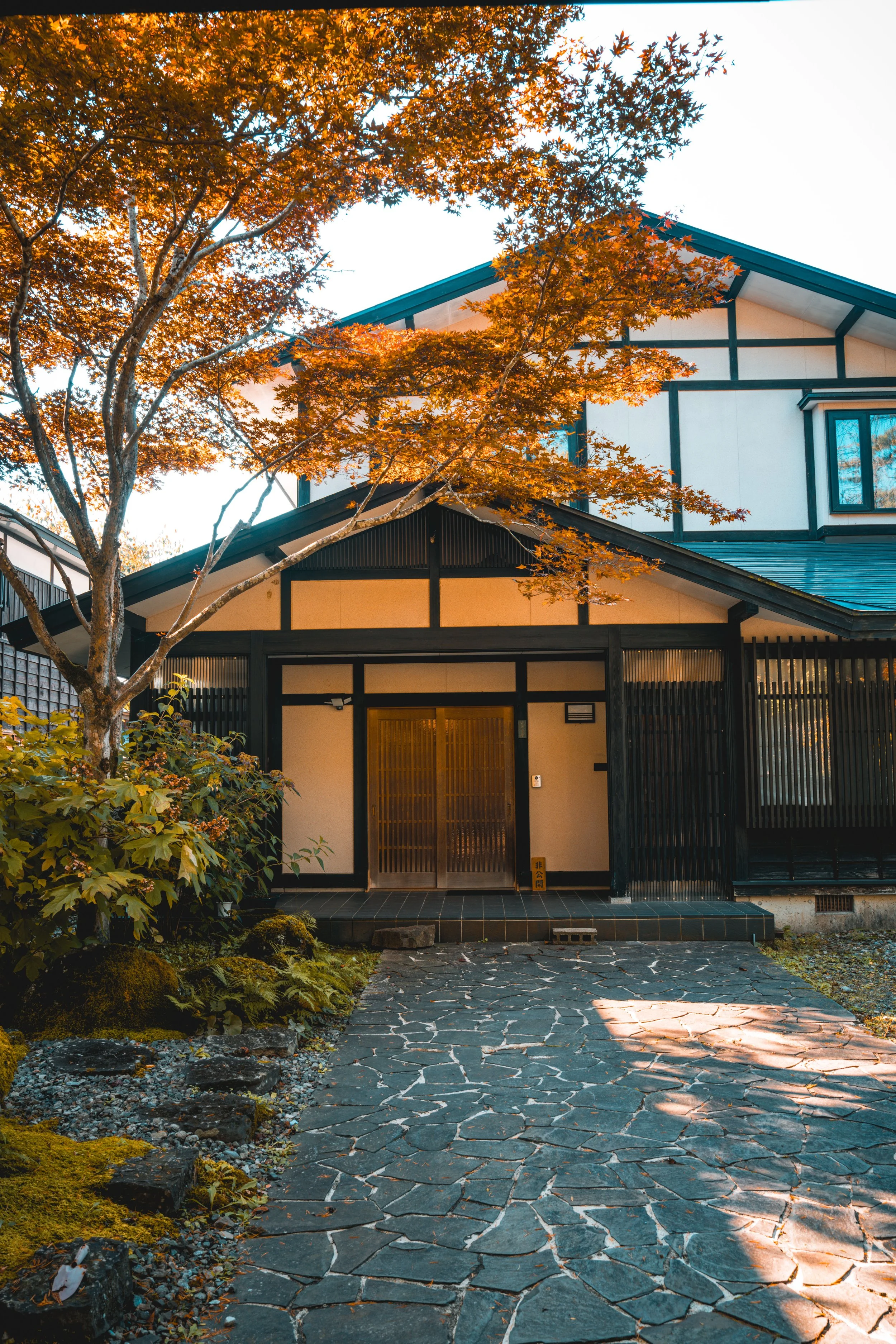
Stepping back from the street, I found this timeless refuge hidden beneath a of weeping willows and needle pines. A traditional Japanese wooden house - white walls and earthen roof telling centuries of stories. Standing there, I felt completely removed from the modern world. This is what drew me to Kakunodate.
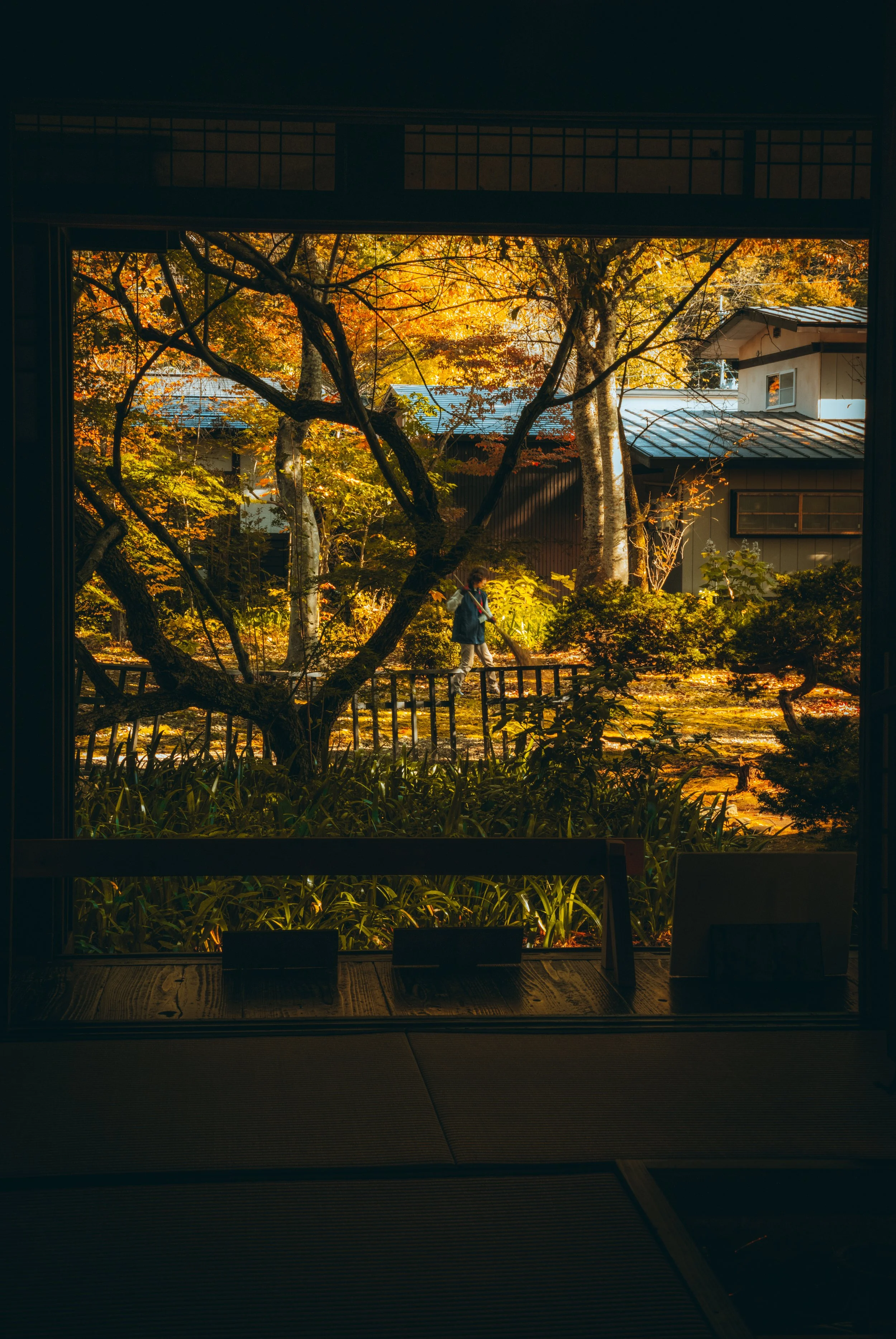
Another window, another threshold between worlds. This time, a small figure stood in the garden beyond, framed perfectly by the wooden lattice. The golden leaves seemed to pause mid-fall above her, suspended in an impossible golden moment.
How many people, over centuries, have stood where I stood and watched the autumn garden through this same frame?
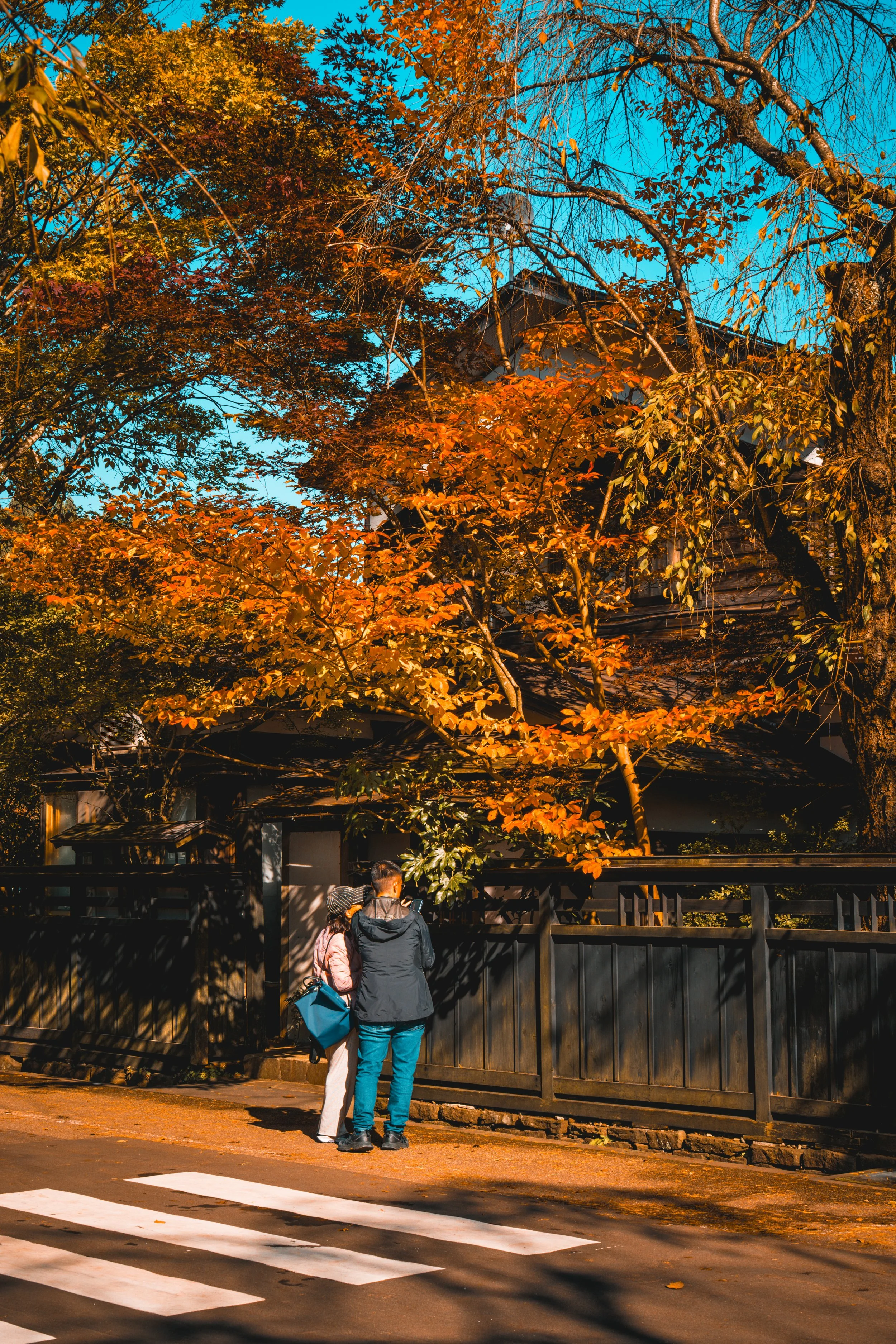
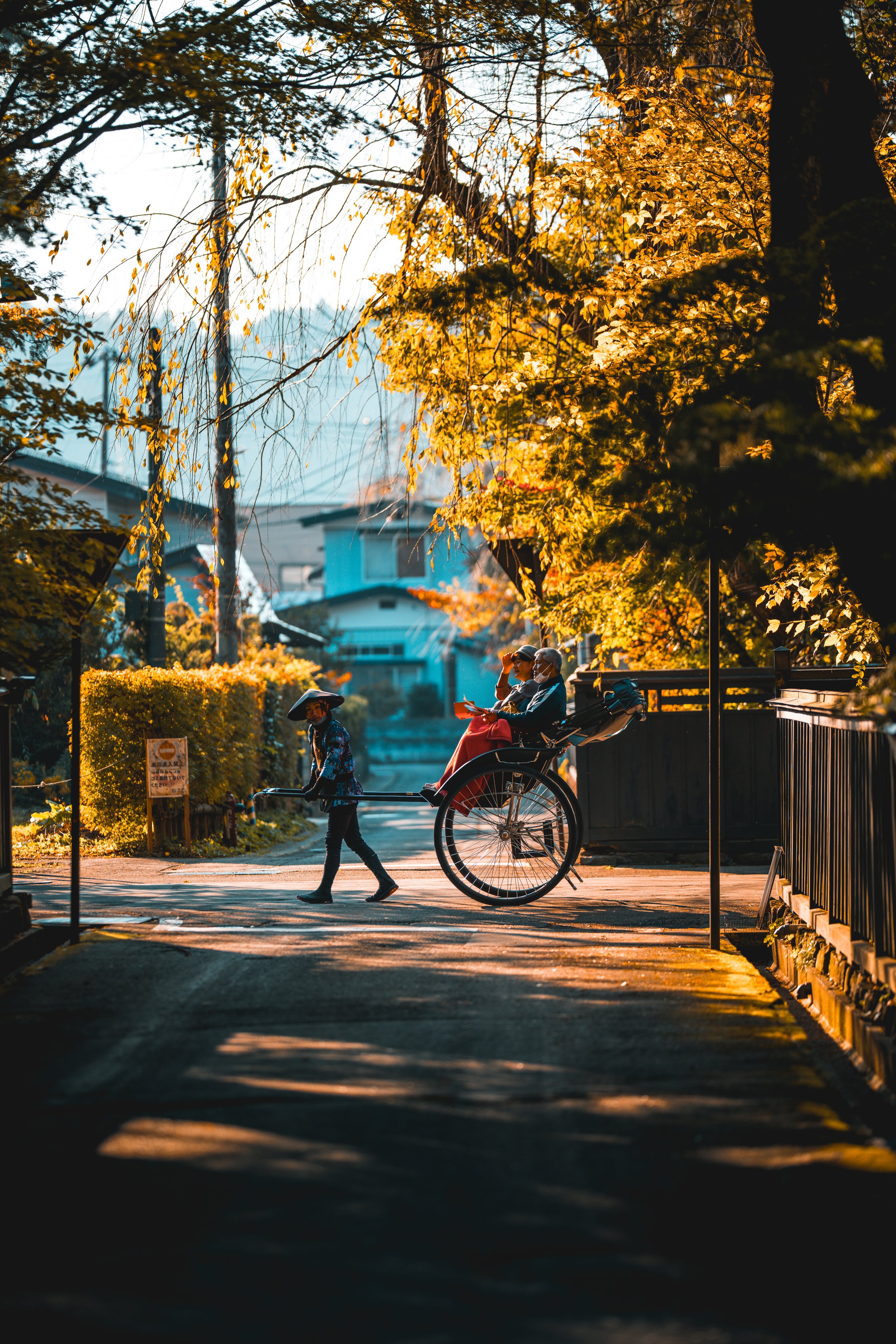
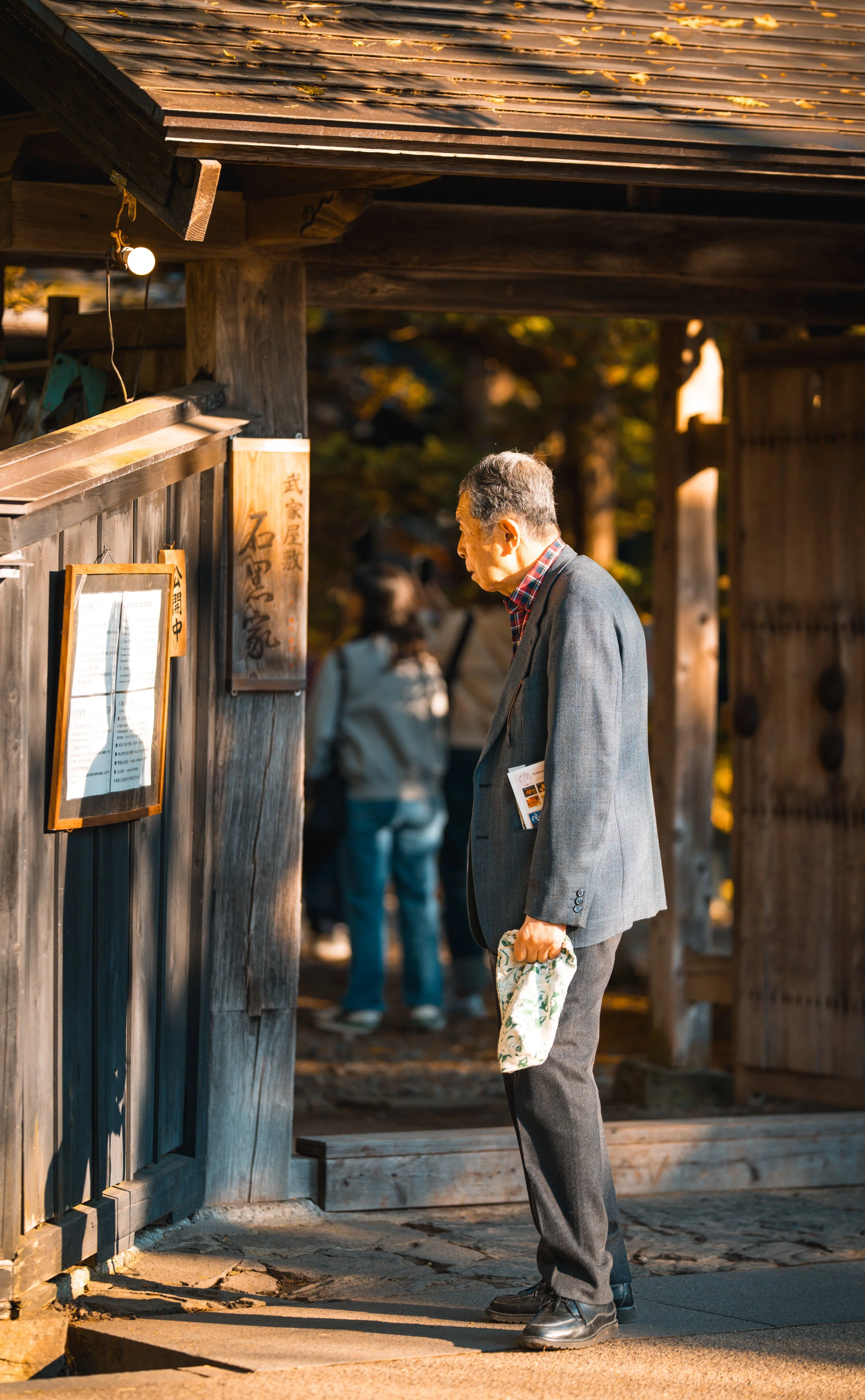
Walking through the swallow streets, I met many other curious people exploring the history of Kakunodate.
Kakunodate doesn’t ask you to rush. It invites you to slow down, to notice the textures in the wood, the chill in the air, the way the light shifts as clouds never appear. Even in the middle of the day, the calm felt steady and unbroken.
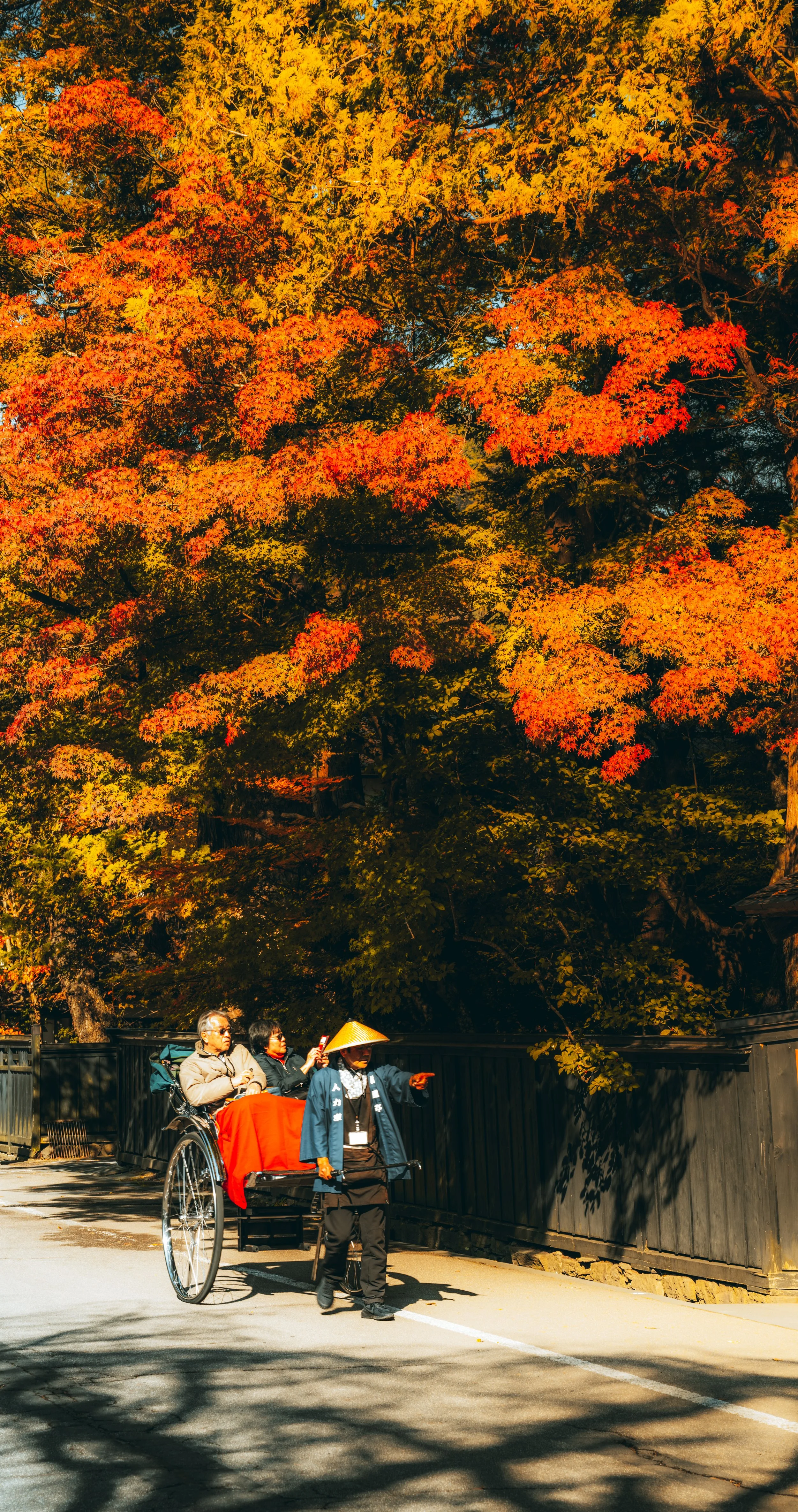
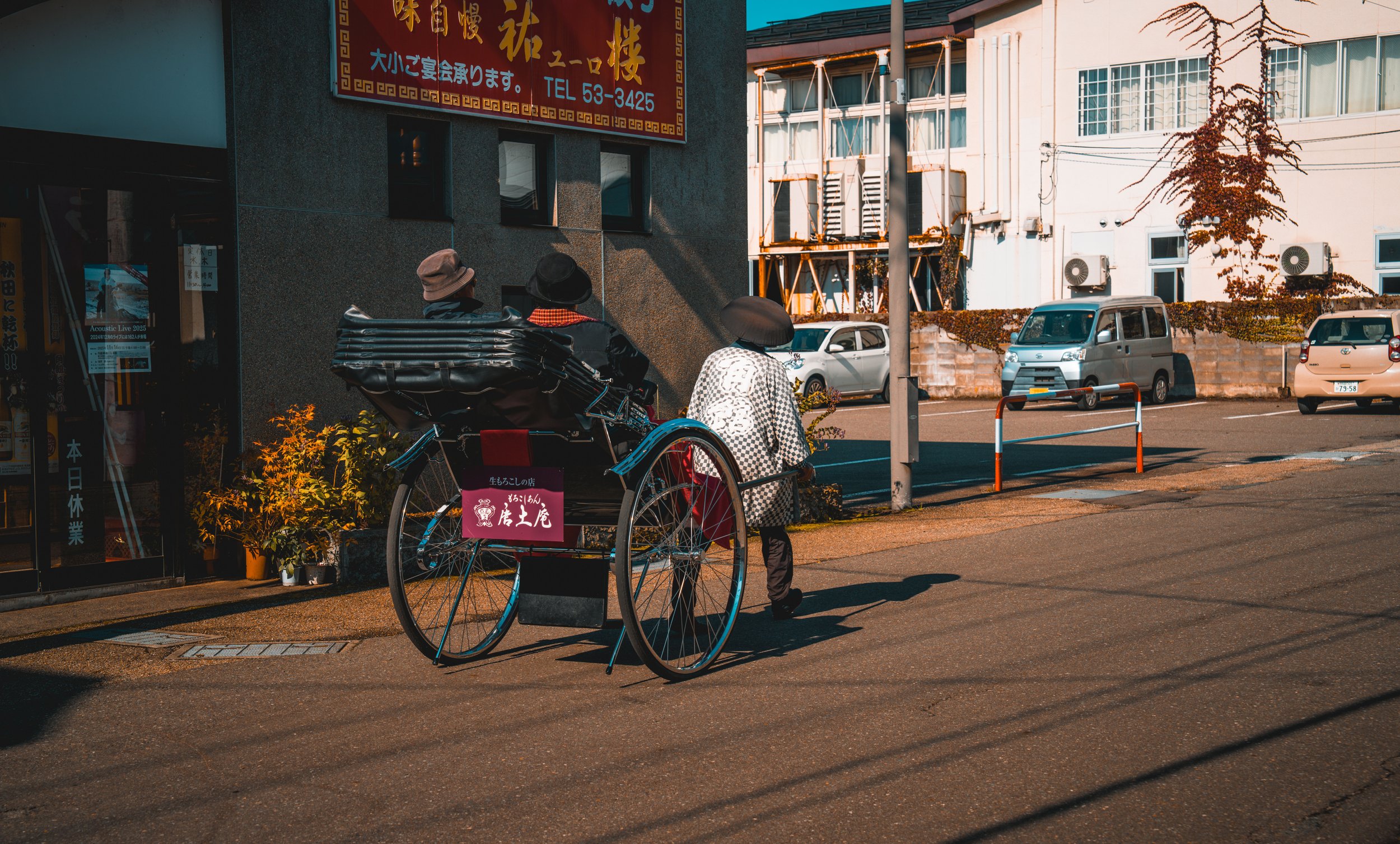
The traditional human-drawn transport, the jinrikisha.
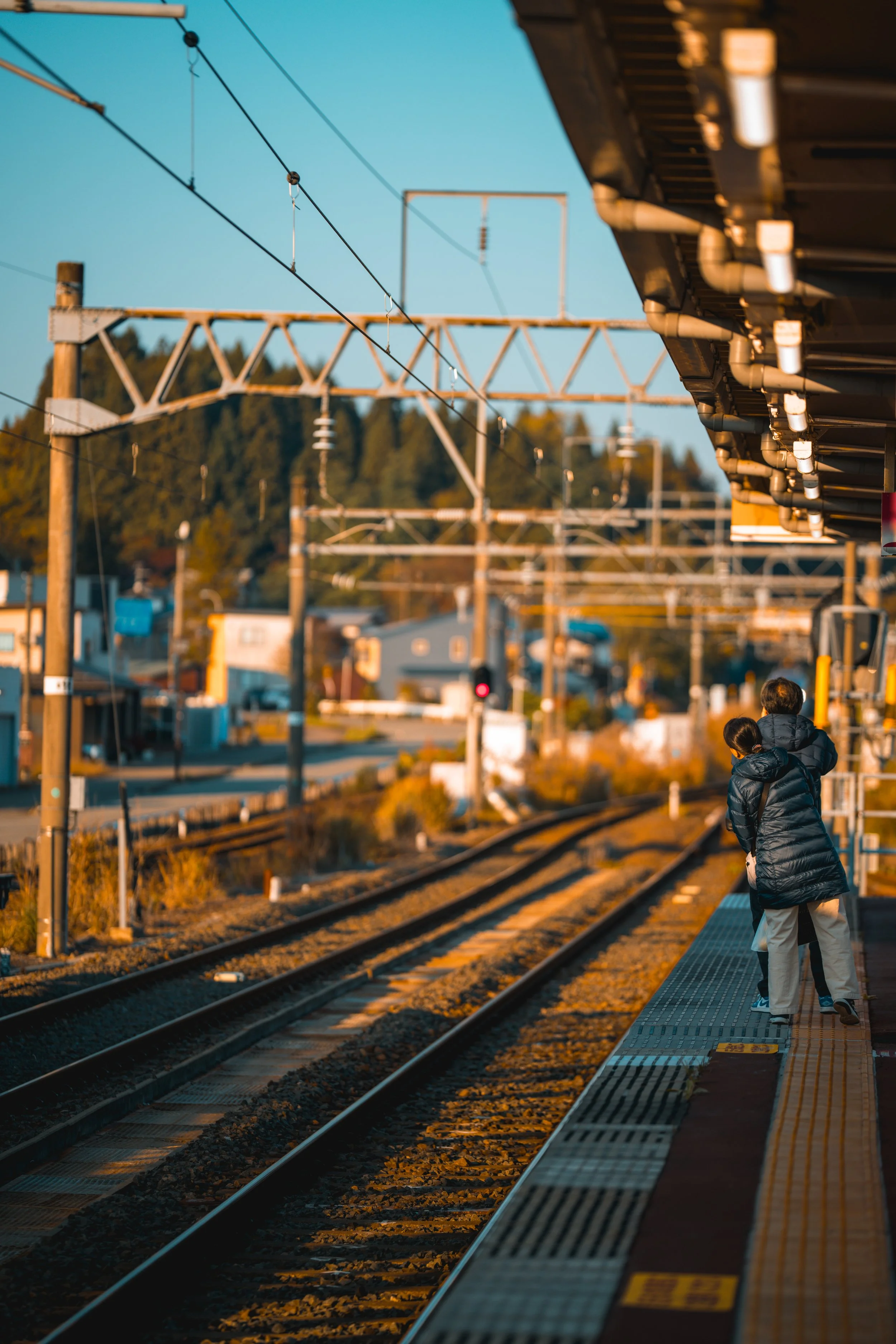
At the train station, a figure stood on the platform in the golden afternoon light, watching the tracks, and waiting eagerly for the Shinkansen to arrive.
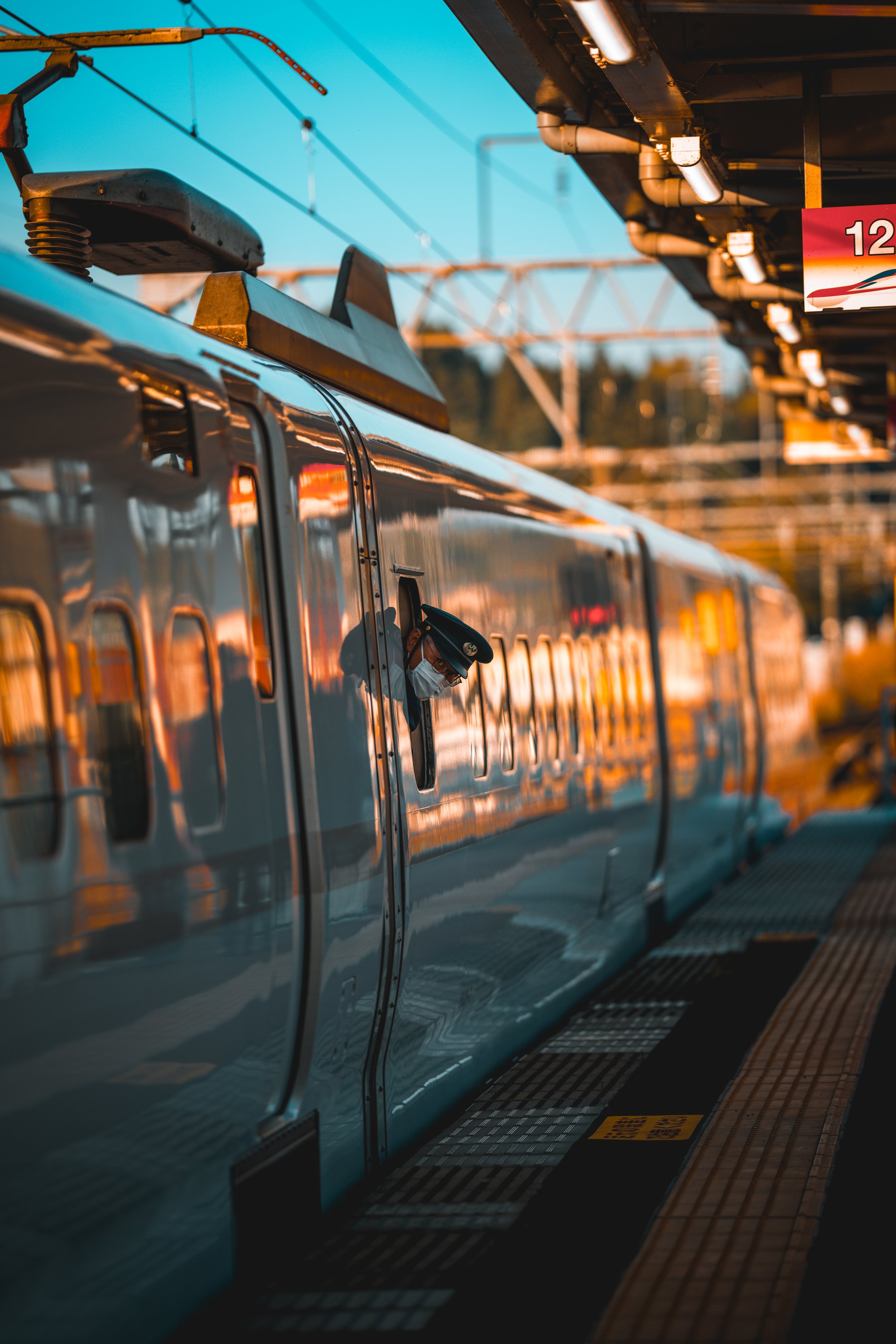
Leaving Kakunodate at the end of the day, I felt that satisfying tiredness that comes from walking without a plan and letting a place unfold naturally. The sunlight was beginning to sink, and the air was turning colder again, but the town stayed beautifully calm, as if it had been waiting for its next quiet evening. As the train pulled away, I watched the samurai district disappear behind the trees and felt grateful for such a simple, peaceful day—one filled with clear light, crisp air, and stories hidden in old wooden walls.